Review › Health › Wearables › 2026
Fitness Trackers 2026: Why Most Bands Count Your Steps but Never Explain Them
Slept eight hours and still feel flat? Duration is only half the story. Most trackers hand you totals: steps, hours, calories. The better ones read what's happening underneath, like heart rate variability, sleep stages and recovery, and turn it into plain-language advice you can act on today.
 WHOOP

 WithingsScanWatch 2
You know the pattern. You go to bed on time, eat reasonably, get your walk in, and still wake up drained. For most people the body is a black box: we guess what's working instead of knowing.
A lot of trackers don't help much. They're built around vanity metrics, numbers that look good on a dashboard but explain nothing. 10,000 steps tells you nothing about why you're wiped out on a Tuesday afternoon.
The signals that do explain it, such as heart rate variability (HRV), resting heart rate, skin temperature and time in each sleep stage, used to be the selling point of premium bands like WHOOP. The catch is the business model: with some of them you never own the device outright and keep paying a yearly membership to see your own data.
So we looked for the tracker that gets closest to that data depth while letting you buy it once. One band came out ahead on that balance.
Rather than stopping at raw charts, it translates the readings into short, specific guidance, along the lines of "recovery is lower than usual, keep today's training light" or "your sleep was shorter than your baseline, plan an earlier night."
How we scored each tracker
- Data depth: Does it go beyond steps to HRV, recovery, SpO2, skin temperature and sleep stages?
- Sleep tracking: Does it break sleep into stages and track trends over time?
- Meaning, not just metrics: Does the app explain what the numbers mean and what to do next?
- Cost of ownership: What do you pay over three years, and are core insights included with the purchase?
🏆 Our #1 pick for 2026
Rating: Excellent
1st place: Editor's choiceBest value
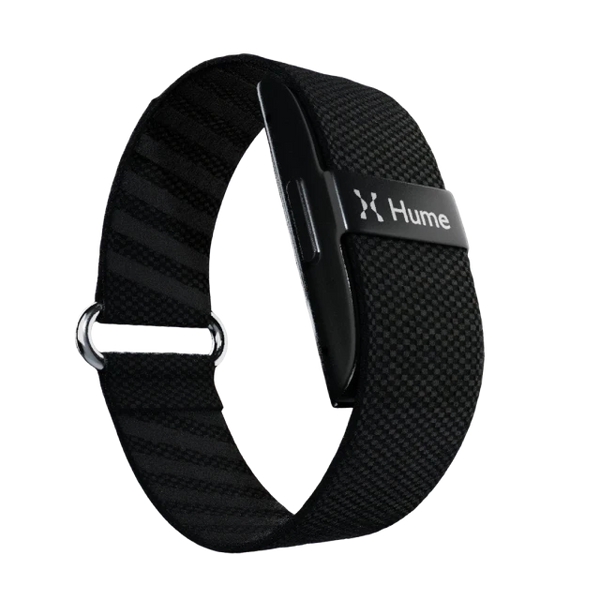
Hume Band 2.0
A screenless band that tracks your body around the clock and tells you what the data means.
- More than steps: Tracks HRV, continuous heart rate, blood oxygen (SpO2), skin temperature, strain, recovery and sleep stages (light, deep, REM, awake), plus blood pressure trend insights.
- Plain-language coaching, no distractions: There's no screen and no notifications on your wrist. The app turns the readings into scores such as Metabolic Momentum and Metabolic Capacity, with suggestions on what to change.
- Own it, don't rent it: The band is a one-time purchase and the free app covers your core metrics. Hume Premium (from $8.99/month) adds AI coaching and is optional.
- Built for wearing all the time: Up to 14 days of battery, IP68 dust and water resistance (1 m for up to 2 hours), and a soft knit strap you can sleep in.
- Longer-term view: Weekly and monthly trends show whether your sleep, recovery and activity habits are moving in the right direction.
- 45-day refund policy: Hume accepts returns within 45 days, even if the band has been used, so you can see how it fits your routine first.
- Give it a few days: Like other HRV-based trackers, it needs several nights of wear to learn your personal baseline before the recovery advice is fully tuned.
- Not a medical device: It's a wellness tracker. Use it to spot trends, and talk to your doctor about anything that concerns you.
✓ 45-day refund policy✓ Free shipping✓ No subscription required
Worth knowing: why HRV matters more than steps
Heart rate variability is the small variation in time between heartbeats. It reflects how your nervous system is balancing stress and recovery: higher-than-usual HRV generally means you've recovered well, while a drop below your normal range often follows hard training, poor sleep, alcohol, stress or the start of an illness. Because it's so individual, what matters is your trend against your own baseline, which is why consistent 24/7 wear counts for more than the occasional spot check.
Basic tracker (step counter)
Focuses on movement and totals. Tells you "You walked 5 km today" but not how your body is coping.
✓ Hume Band 2.0
Focuses on how your body responds through the day and night, and turns it into a next step: "Recovery is low, go easy today."
2nd place
WHOOPWHOOP
Excellent recovery data, but you pay for it every year
WHOOP set the standard for recovery and strain tracking, and its coaching app is still one of the best. The band is comfortable and screenless, much like Hume's. The difference is the model: you don't buy WHOOP, you join it. Memberships run from about $199 to $359 a year depending on the tier, and the hardware comes with the membership. If you stop paying, you lose access to the service.
- Very detailed recovery, strain and sleep data
- Polished app and a large community
- Ongoing membership required, about $199–$359 per year
- Highest three-year cost in this list
- Less focus on long-term metabolic and longevity scores than Hume
3rd place
RingConn Gen 2
The most discreet option: a smart ring with long battery life and no subscription
RingConn Gen 2 suits people who don't want anything on their wrist. It's discreet, comfortable to sleep in, and strong at passive all-day trends, with 10 to 12 days of rated battery life and sleep apnea monitoring. It's around $299 with no membership. The trade-off is the ring format: readings can be less reliable during lifting or HIIT, and fit can change with temperature and swelling.
- Very discreet ring form factor
- Good for sleep and all-day wear
- No subscription, no screen
- Workout tracking is less consistent than wrist bands
- Fit and sizing comfort vary from person to person
- If the ring feels off, people stop wearing it and the data stops
4th place
Oura Ring 4
The most premium-feeling ring, with a membership on top
Oura Ring 4 has the most refined finish and app of the rings here, and its sleep and readiness reports are well presented. The cost model is the drawback: the ring starts around $349, and the full insights need an Oura membership at $5.99 a month ($69.99 a year), which turns a minimalist tracker into an ongoing expense.
- Premium design and a well-known brand
- Very polished app
- Strong sleep and readiness reports
- Full insights require a paid membership
- Higher long-term cost than one-time-purchase trackers
- Comfort and durability depend on fit and lifestyle
5th place
WithingsScanWatch 2Withings ScanWatch 2
Health tracking that looks like a classic analog watch
ScanWatch 2 is the pick if you want health tracking in something that still looks like a regular watch. It's a hybrid with a small display, solid daily health features and roughly a month of battery life, for about $369.95. It isn't built around recovery the way a screenless band or ring is, and a watch can be less comfortable to sleep in. Some extra analysis sits behind the optional Withings+ subscription.
- Best "real watch" look in this list
- Long battery life
- Easy to wear with formal clothes
- Less recovery-focused than dedicated bands and rings
- Watch format can be less comfortable for sleep
- Some advanced features need Withings+
Our verdict: from guessing to knowing
The tracker market splits into two camps: cheap bands that count steps and not much else, and premium trackers that charge you every month. Either way you lose something, whether it's useful data or hundreds of dollars over a few years.
The Hume Band 2.0 is our overall pick because it sits between the two: the sensor suite and sleep and recovery depth of a premium band, sold as a one-time purchase, with core insights included.
What sets it apart is the app. After a few days of wear it learns your baseline, then explains your readings in plain language and suggests what to adjust, instead of leaving you to interpret charts.
Bottom line: if all you want is a step count, your phone already does that. If you want to understand how your sleep, stress and habits are affecting your energy, the Hume Band 2.0 is the strongest all-round value we found.
Cost of ownership over 3 years
| Tracker | Upfront | Ongoing fees | Approx. 3-year total |
|---|---|---|---|
| Hume Band 2.0Our pick | $249 (one-time) | None required; Premium optional from $8.99/mo | $249 |
| RingConn Gen 2 | About $299 | None | About $299 |
| Withings ScanWatch 2 | About $369.95 | Withings+ optional | About $370 |
| Oura Ring 4 | From about $349 | $69.99/yr membership | About $559 |
| WHOOP | Included with membership | About $199–$359/yr | About $597–$1,077 |
Prices are list prices from each brand's own site or major retailers as of October 2026 and change often, especially around sales. Totals exclude tax, optional add-ons and optional subscriptions.
Questions before you buy
Do I need a subscription to use the Hume Band 2.0?
No. The band is a one-time purchase and the free Hume app shows your core metrics, including Metabolic Capacity, Metabolic Momentum and your Health Score. Hume Premium, from $8.99 a month, adds AI coaching and deeper analysis, but it's optional.
How does the Hume Band 2.0 compare with WHOOP?
Both are screenless bands built around HRV, sleep and recovery. The biggest difference is cost: WHOOP is a yearly membership of about $199 to $359, while the Hume Band is bought once. WHOOP's strength is its training and strain coaching; Hume puts more weight on long-term metabolic and longevity scores.
What does the Hume Band 2.0 measure?
Continuous heart rate, heart rate variability, blood oxygen (SpO2), skin temperature, sleep stages (light, deep, REM and awake), activity, strain and recovery, plus blood pressure trend insights.
Do I need my phone nearby all the time?
No. The band records on its own, so you can sleep or train without your phone, and the data syncs over Bluetooth next time you open the app. It works with iPhone 8 or newer (iOS 14+) and Android 8.0 or newer.
Can I return it if it's not for me?
Yes. Hume offers a 45-day refund policy, including on used products. Check Hume's refund and returns page for the current terms before you order.
Disclaimer: This comparison is for general information only. Scores are Stampello's editorial ratings based on manufacturer specifications, pricing and published reviews; we did not run laboratory tests. Stampello may earn a commission from purchases made through links on this page. Fitness trackers are not medical devices and are not intended to diagnose, treat, cure or prevent any disease. Talk to a healthcare professional before making health decisions. Product features, prices and availability change, so confirm current details with the manufacturer.